

By using this website, you agree to the storing of cookies on your device to enhance site navigation, analyze site usage, and assist in our marketing efforts. View our Privacy Notice for more information.
By using this website, you agree to the storing of cookies on your device to enhance site navigation, analyze site usage, and assist in our marketing efforts. View our Privacy Notice for more information.
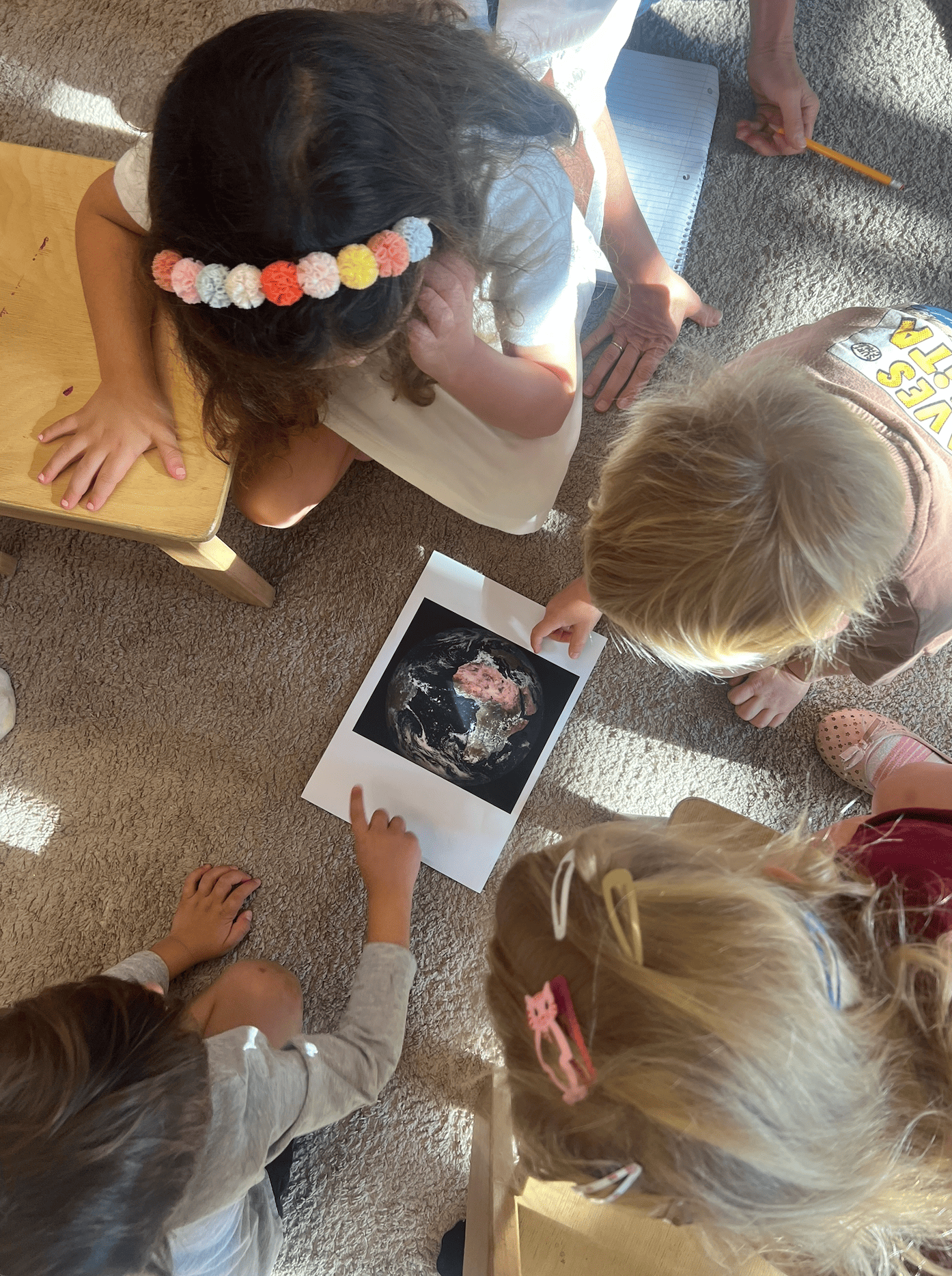
The rules for how humanity shares space are being written by adults. Every one of those adults was once three years old, already working out who gets to come in, what counts as fair, and what to do when something breaks. By the time anyone reaches a negotiating table, most of that early thinking has been rewritten by everything learned since.The CAC Lab went looking for that thinking while it is still taking shape. We asked a class of three- and four-year-olds to imagine going to the Moon. They took us further than we expected.
A PreK3 class of around eighteen children at Cairo American College, an international school in Cairo, whose lives span many cultures and languages.
Their teacher, Ms. Jennifer Sysko, known to the children as Miss Jenny, had been with them all year. She teaches from the Reggio Emilia approach, which treats young children as capable, follows where they lead, and writes down their words because they matter. Kavya Raman of Good Future Ancestor Studio co-designed the lab and was in the room as observer and documentation lead. LunARC led the synthesis.
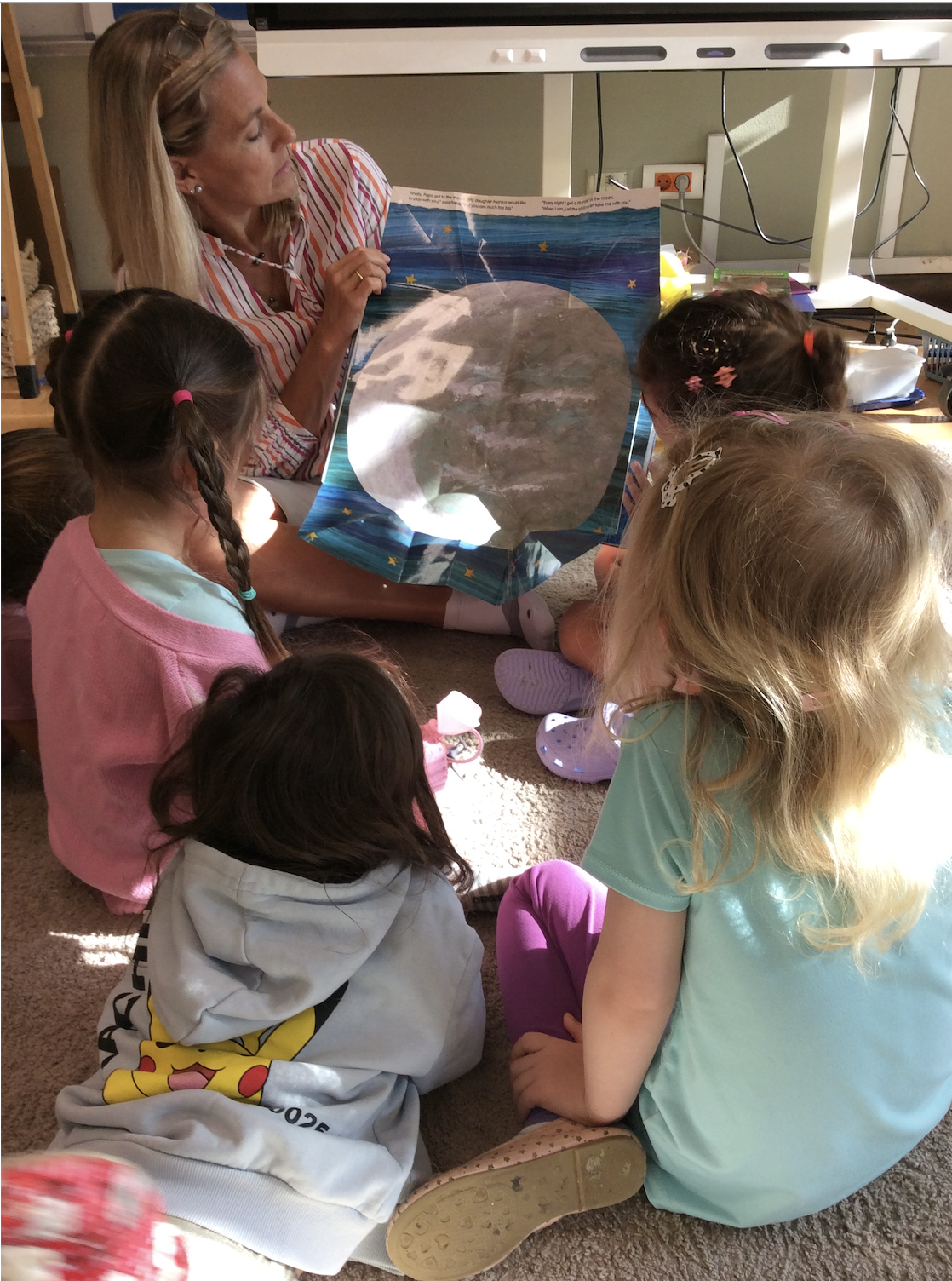

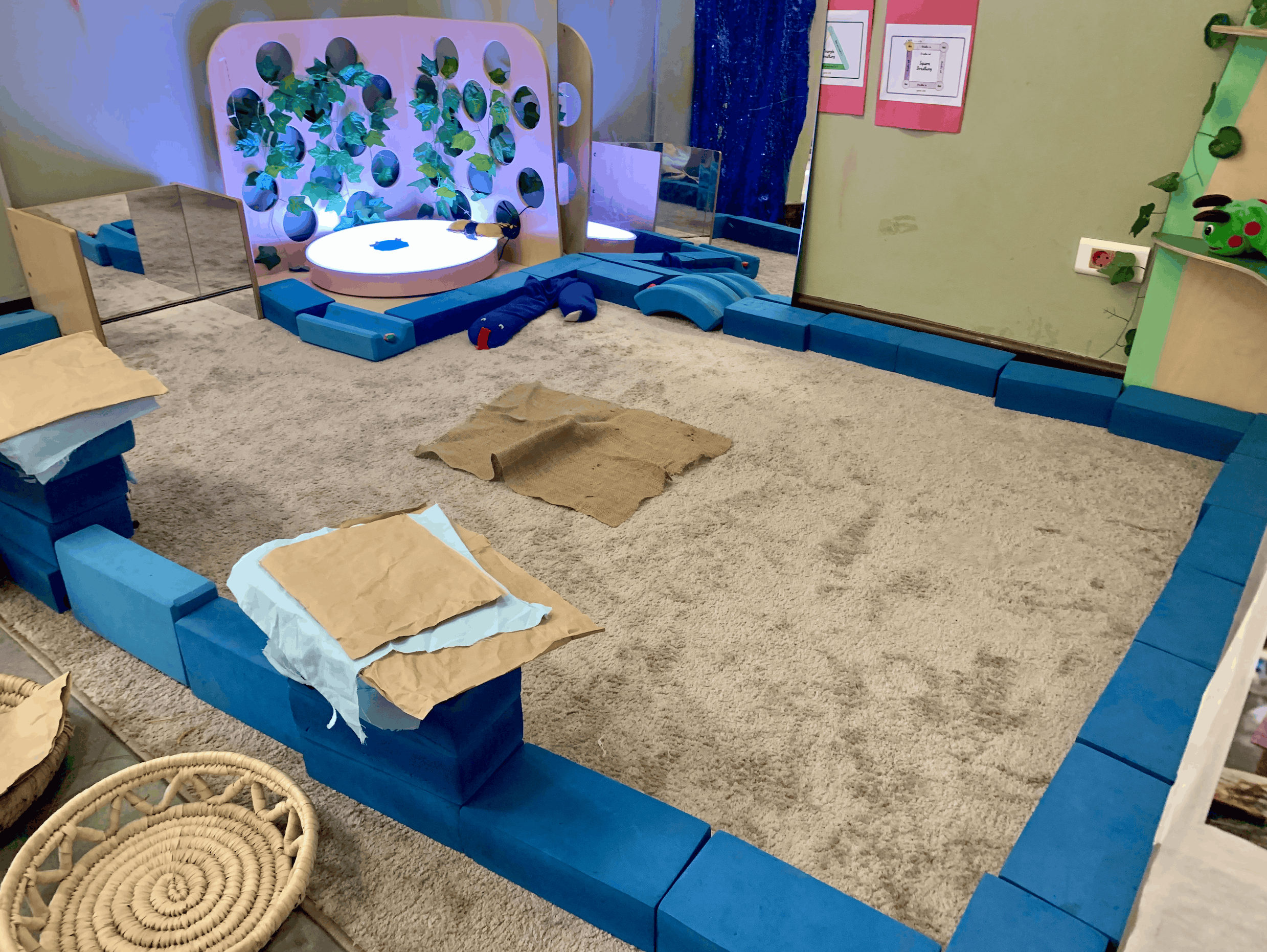
Over five weeks, everything turned on one object: a moon house the children built from foam blocks in the corner of their classroom. It went through a whole life, and so did the questions it raised.
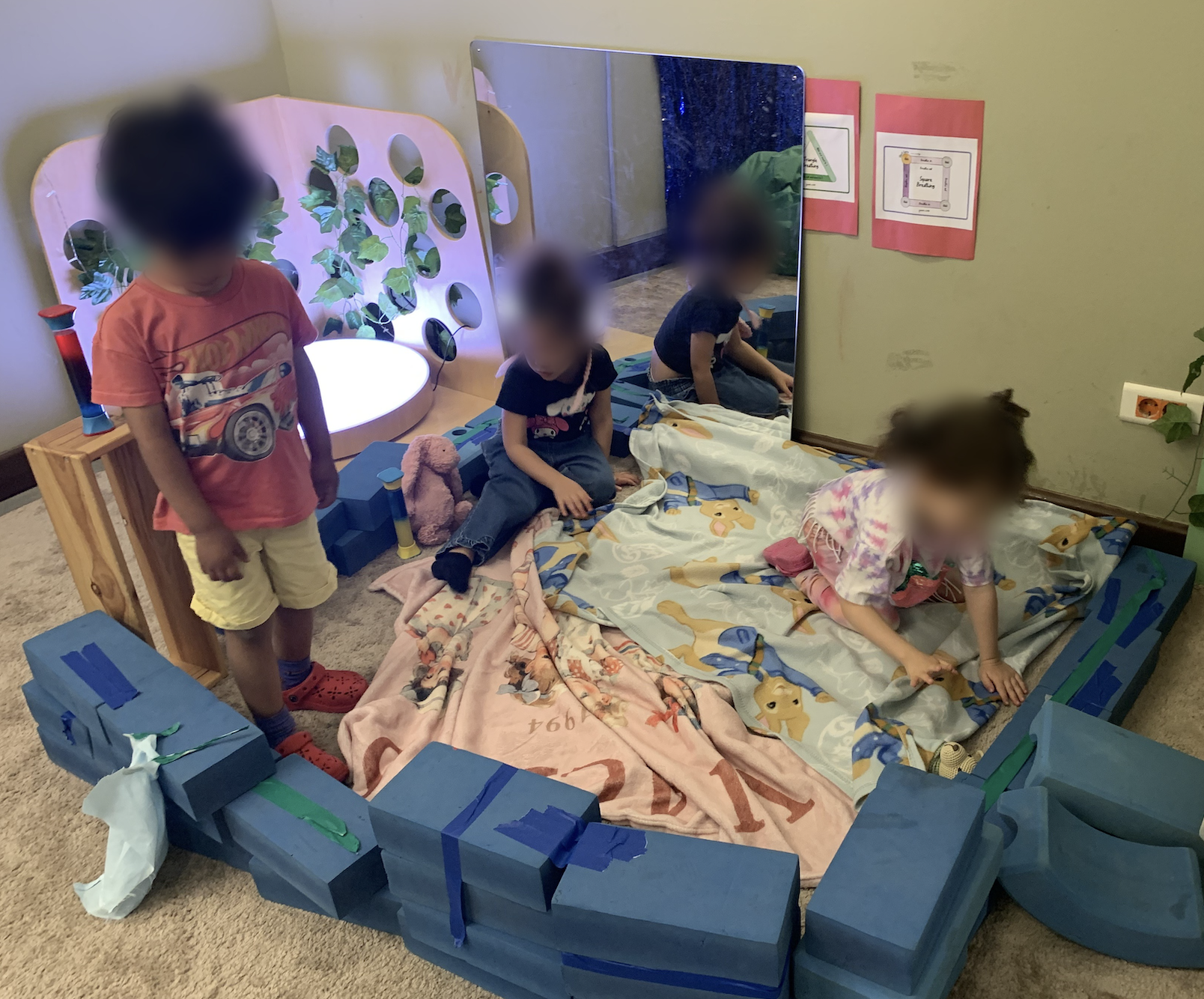
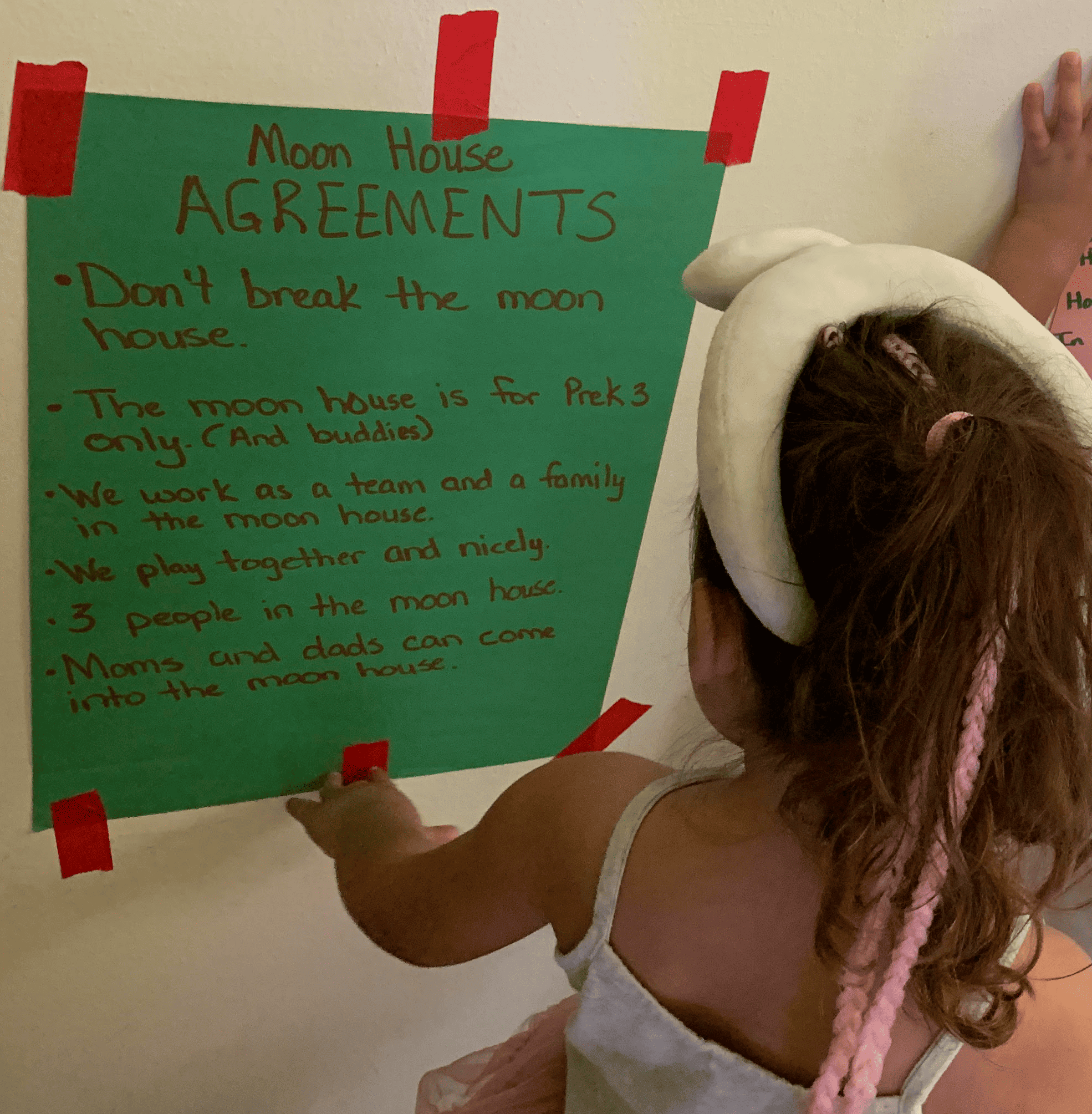

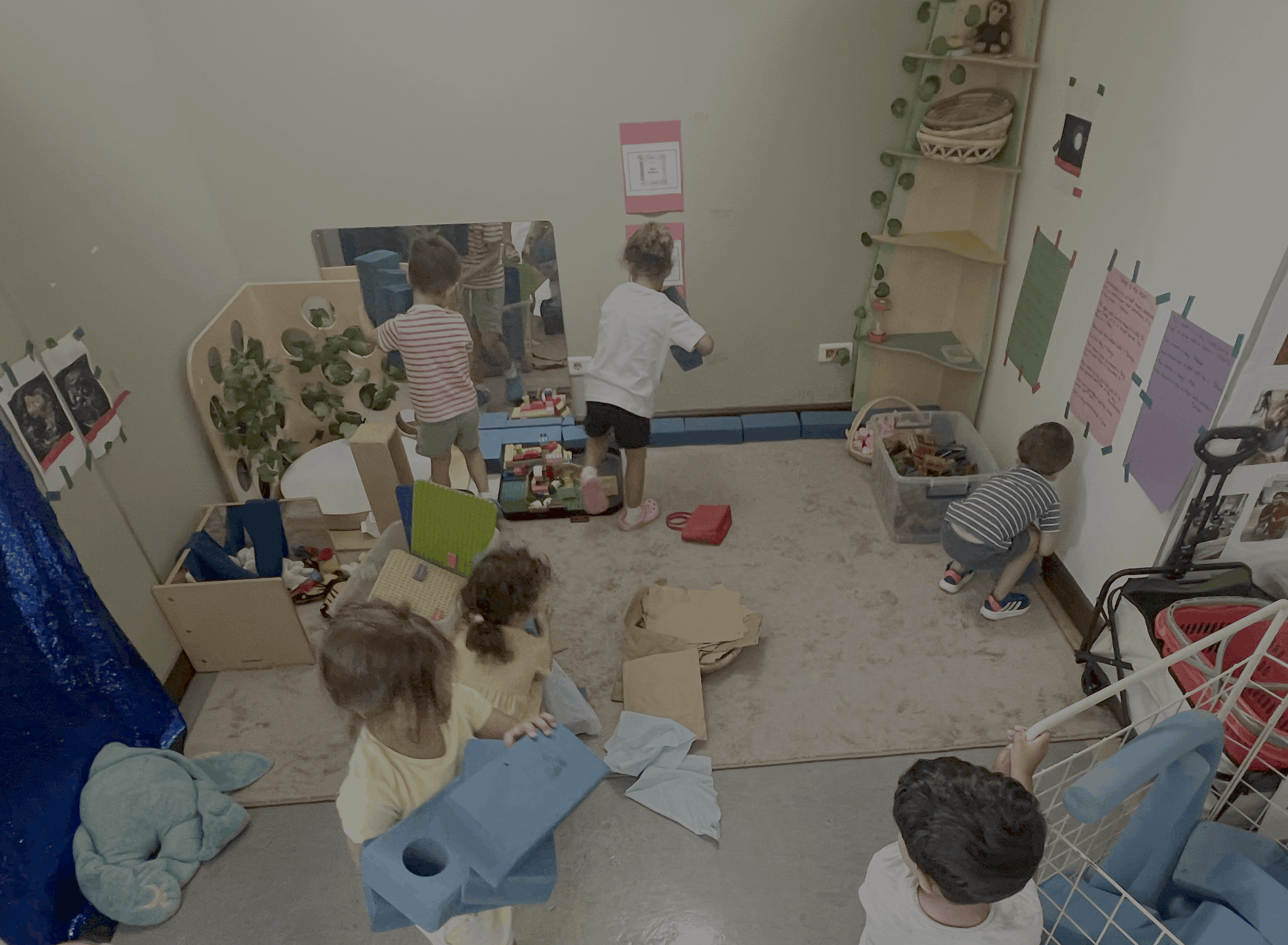
When the five weeks were over, Miss Jenny reflected on what the lab had been for:
"…somehow trying to preserve or keep or help adults re-find what we all start out being."
Ms. Jennifer Sysko, PreK3 teacher, Cairo American College
What they taught us
From five weeks of recordings and notes, the adults in the room drew sixteen principles for holding a shared place well, grouped under Building, Repairing, Sharing and Leaving. Each one goes back to something the children actually did. The charter is written in their collective voice by the adults who watched them. The experiences are theirs, and the composition is ours.
In 2026, we were three and four years old, in Cairo.
In 2100, we will be the elders.
The children lived the raw material of this charter, and the adults wrote it down. Every classroom moment used as evidence was sorted by kind: the children's exact words, episodes the adults witnessed, adult recollections, and adult interpretations, each kept separate. From that record the adults drafted sixteen principles, and each one traces back to the moments that produced it. Three conditions shaped what the children did: a teacher they had trusted all year, a classroom that follows where children lead, and limits the adults set along the way, such as supplying materials or narrowing the options in a vote. The claim we make is a careful one: the instincts underneath sharing a place, such as including by default, repairing before blaming, sharing equally and leaving things ready for whoever comes next, are already visible at three and four. They can be documented closely enough to matter to anyone writing rules for shared places, the Moon included.Small print: The Cairo Moon Charter is participatory governance design. It is not a policy document and does not represent the official positions of Cairo American College, Good Future Ancestor Studio, or LunARC. The full evidence record is available on request: info@lunarc.org
The children's story is becoming a book for children, so the moon house can reach classrooms and bedtimes far from Cairo. Arriving November 2026.
The CAC Lab's materials will travel to the Moon on a future LunARC mission, alongside the work of every Lunar University lab, and become part of the permanent lunar record.LunARC is also developing an open version of the lab, so other classrooms can build their own.
The Lunar University labs have travelled from the cradle of biodiversity to the cradle of civilization, and more are coming.


